ACTIVITIES OF DAILY LIVING (ADL)
Every parent wishes for their child to be independent so they can maintain a quality of life even when the parents are not around to help them. In this blog we will focus on the first crucial step; which is achieving independence in performing Activities of Daily Living (ADL). Learning how to do simple daily living tasks, like brushing, bathing, eating, dressing and others; independently, is a key milestone for the child and hence parents need to actively participate in the process.
Occupational therapy benefits children with special needs in their activities of daily living. It goes beyond fine motor movements to developing functional skills using a multidisciplinary approach (visual, sensory, motor, etc.)
1. Always keep in mind that what might be acceptable behaviour for a younger child will not be accepted as the child grows into an adult. Hence start the child’s independence journey as early as possible.
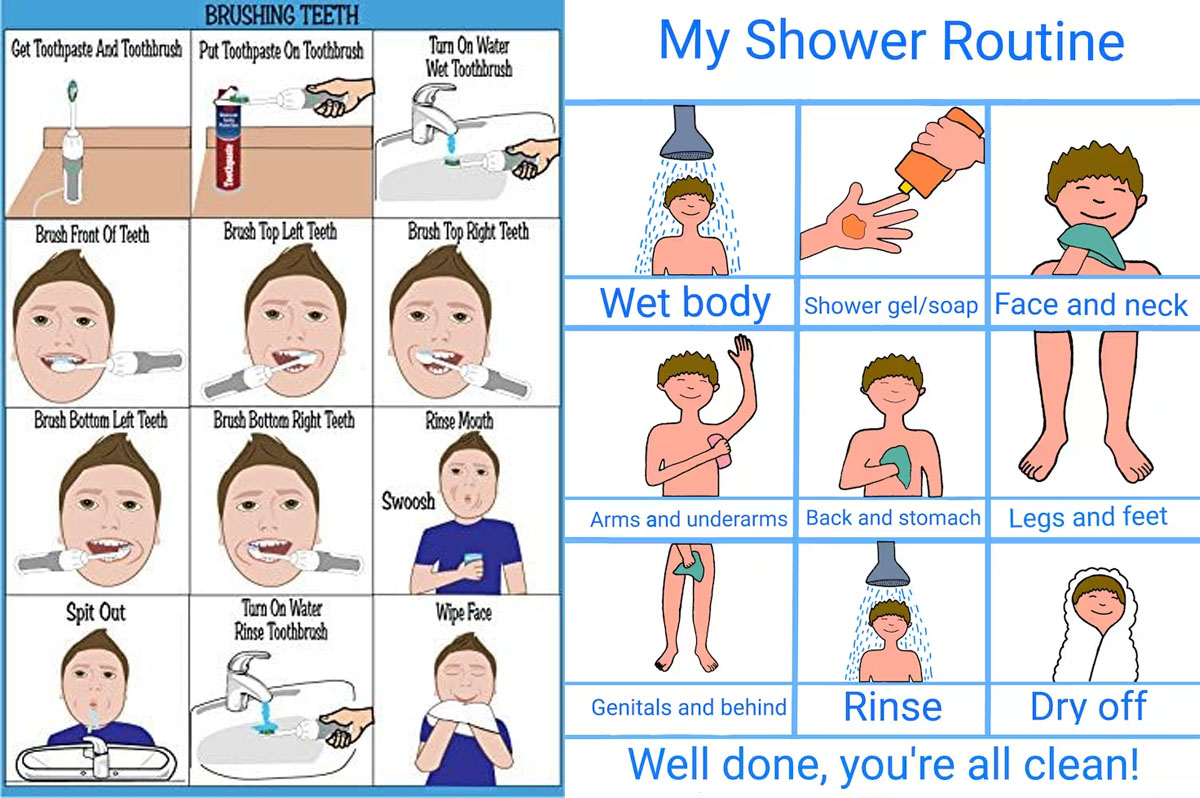
2. Use a visual schedule that breaks a major task (for example brushing) into smaller steps.
3. Give very simple instructions to the child. Repeat any instruction only after 30 seconds. Avoid nagging!
4. The sequence of monitoring a task should go from physically assisting the child to visual instructions to verbal instructions and finally minimal supervision.
5. Learn to differentiate between behavioural issues versus sensory issues.
6. Various games and fun activities can be used to increase finger dexterity and strength.
7. While brushing some of the common issues parents face are: crying, not spitting, not holding a brush or eating toothpaste.
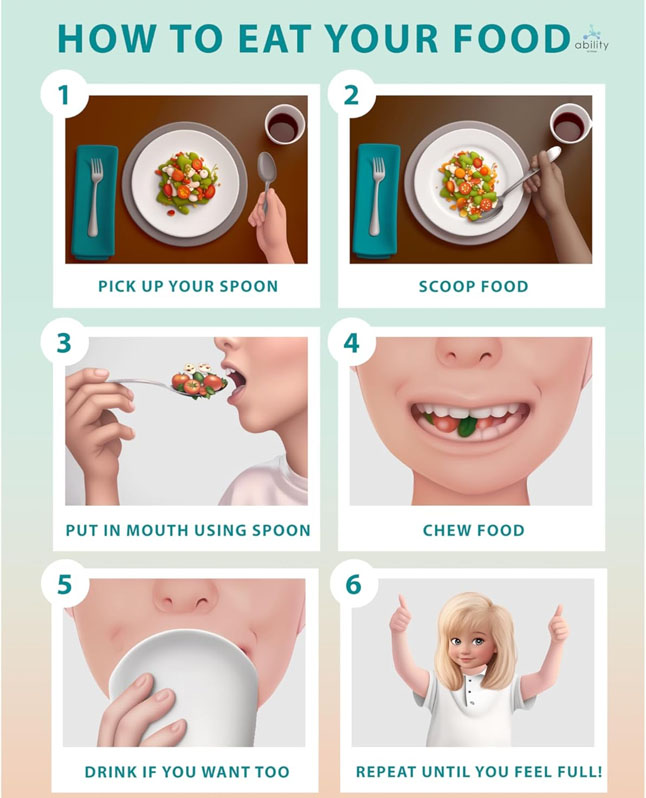
8. While eating some of the issues faced are: picking up food, chewing, eating too fast, not using a spoon, pocketing food and picky eater.
9. Drooling is generally caused by low tone. Massage of the chin, lower lip and above the upper lip is recommended.
10. Bathing is one of the easiest activities as kids enjoy playing with water and taking a bath. If the child is not interested, it means the parent is not doing it right. Using liquid soap and loofa for washing are two alternatives to soap.
11. For the dressing, use clothes with designs on the front or back so the child can distinguish between the two. Always try to do the dressing and undressing in front of the mirror.
12. For toilet training keep a minute by minute schedule. At the most frequent times, remind the child if they want to go to the washroom.
13. Last but not least, do not stress the child or yourself. Remember the more relaxed and calm you are, the more your child will enjoy the activity.

 Click to Chat