Floor time DIR in Occupational Therapy Management
DIR Floortime is a therapy approach that uses playful interaction and relationships to help children with developmenta l challenges, including autism, improve communication and social-emotional skills. Speech-language pathologists, along with other professionals and parents, use this child-centered, relationship-based model to build a foundation for communication by following the child's interests and getting down on their level.
Key aspects of DIR Floortime speech therapy
Play-based: Therapists use play as a tool to connect with the child and foster development rather than focusing solely on specific goals or outcomes.
Child-led: The therapy follows the child's lead, using their natural interests to create engaging and motivating interactions.
Relationship-focused: The core of the approach is building strong emotional connections. Therapists and caregivers aim to create a "joyful, playful, and respectful" relationship with the child.
Individualized: The model is built on the "Developmental, Individual-differences, and Relationship-based" (DIR) framework, meaning it considers a child's unique way of processing information, such as sensory sensitivities.
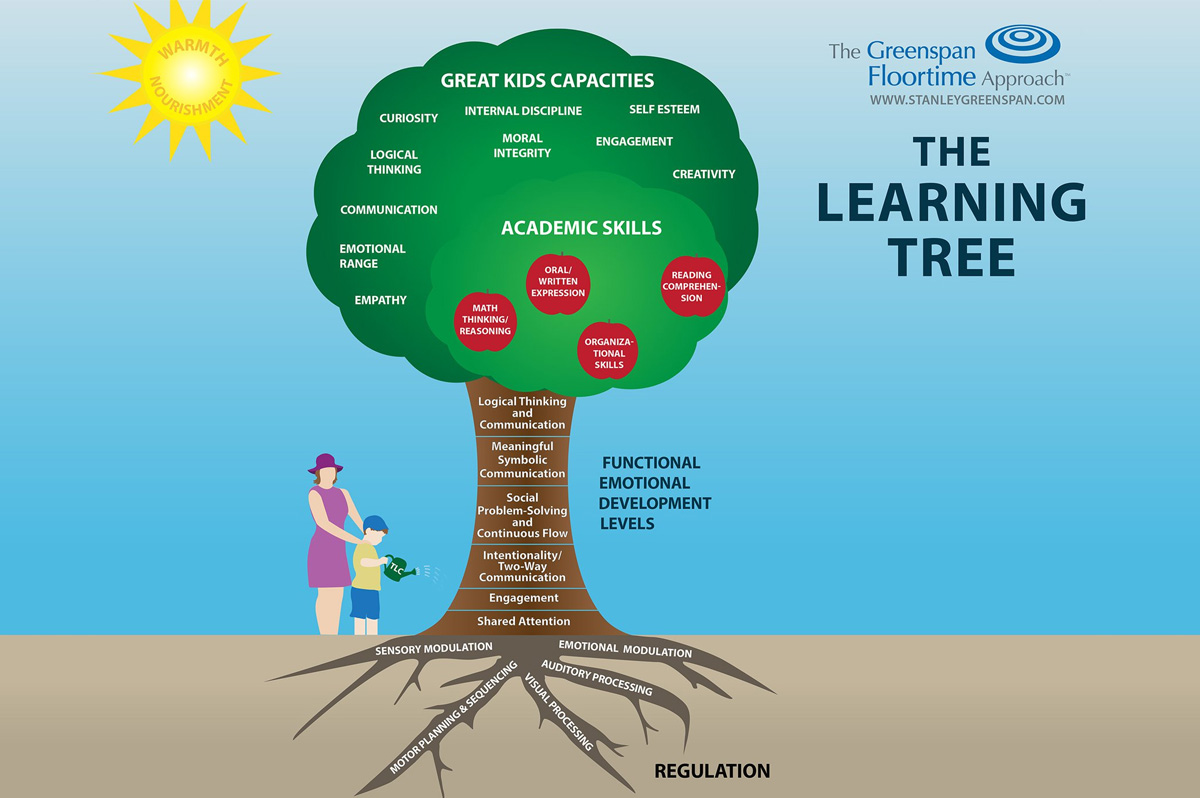
Holistic: It addresses communication by considering the child's sensory, emotional, and motor skills, seeing them as foundational for all other development.
Skill-building: Therapy helps children develop foundational skills like emotional regulation, joint attention, and the ability to engage in social problem-solving, which are critical for more advanced communication.
Support for parents: The model encourages parents to be active participants by providing them with the tools and strategies to implement the approach at home.

 Click to Chat