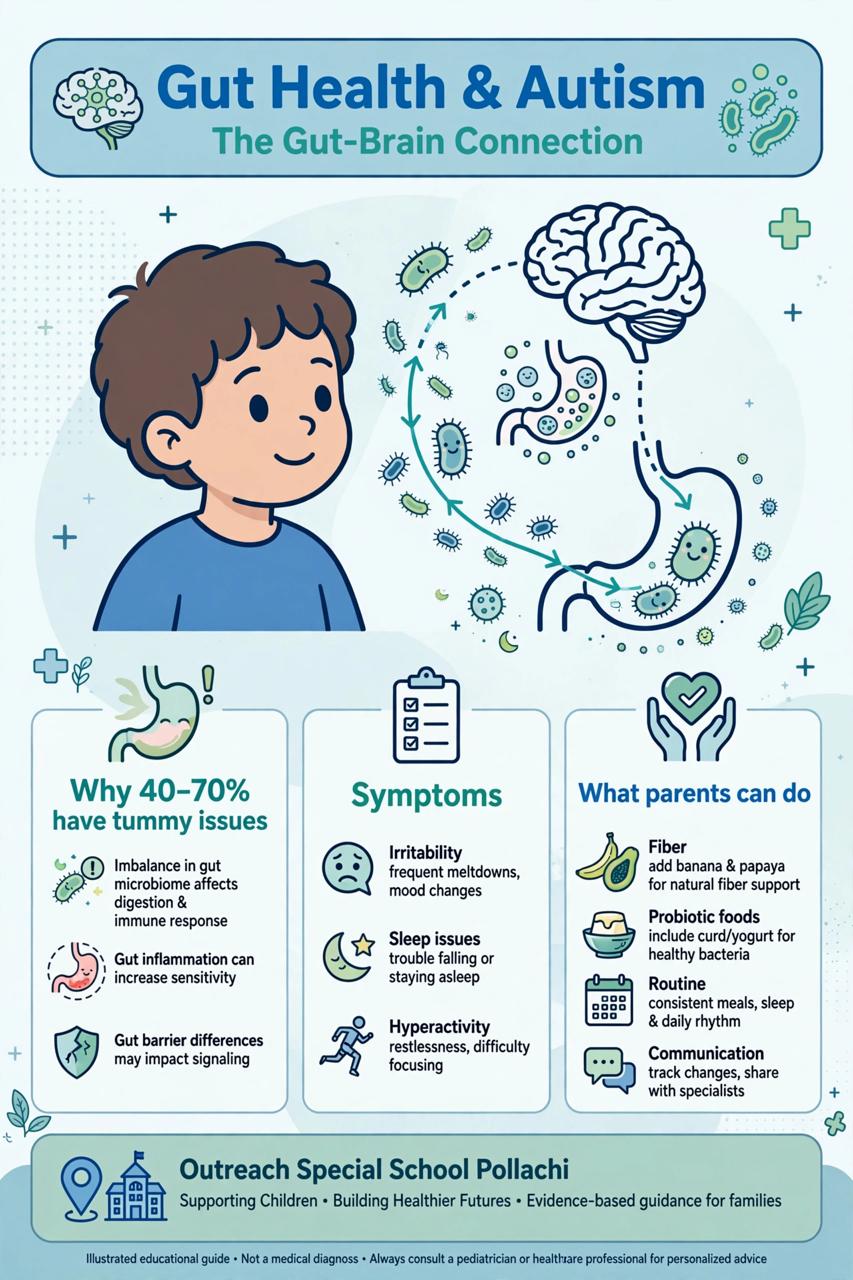
The Gut–Brain Axis and Its Impact on Special-Needs Children*
The *gut–brain axis* is the two-way connection between the digestive system and the brain. It involves the nervous system, immune system, hormones and the gut microbiome.
For autistic and other special-needs children, digestive concerns such as *constipation, bloating, abdominal discomfort, diarrhoea and feeding difficulties* may sometimes affect sleep, mood, behaviour and daily participation. Since some children may find it difficult to communicate physical discomfort, changes in behaviour can sometimes be a sign that something is bothering them physically.
### Supporting Gut Health
Simple healthy habits can support overall well-being:
- Offer a balanced, varied diet with appropriate fibre.
-Encourage adequate hydration.
-Consider suitable probiotic foods when appropriate.
-Maintain predictable mealtime and daily routines.
-Observe patterns between food, digestion, sleep and behaviour.
-Seek professional advice for persistent or concerning symptoms.
It is important to remember that *gut problems do not cause autism, and improving gut health is not a cure for autism*. Research into the gut microbiome and autism is ongoing, and every child has individual needs.
### A Holistic Approach
A child’s *nutrition, digestion, sleep, communication, sensory needs, emotional well-being and learning* are interconnected. Understanding this can help parents, caregivers and educators look beyond behaviour and consider the child’s overall physical and emotional well-being.
At *Outreach Special School, Pollachi*, we believe every child deserves individualised support that considers their health, learning and development as a whole.

 Click to Chat