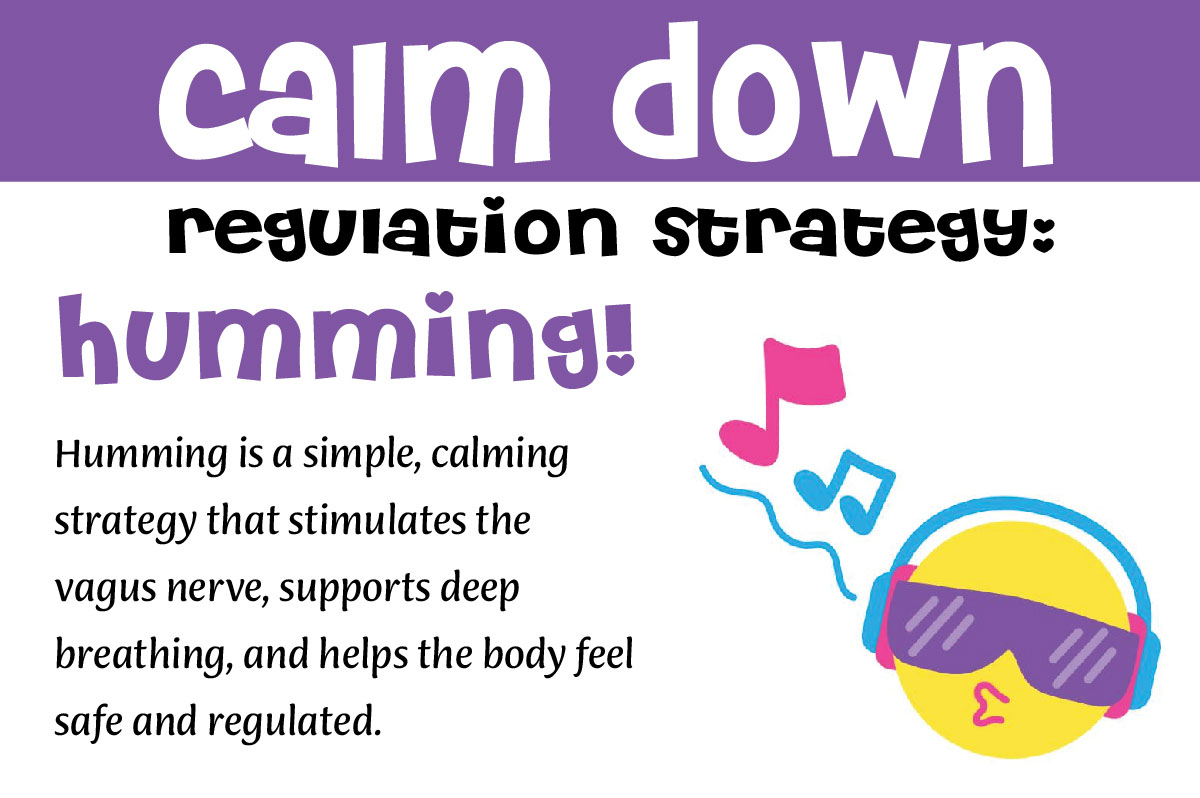
Humming- A calm down regulation strategy
Yes, humming is a simple yet powerful calm-down regulation strategy, especially effective for individuals with sensory sensitivities, anxiety, or emotional dysregulation, including those who are autistic or neurodivergent.
Why Humming Helps Calm the Body and Mind:
1. Stimulates the Vagus Nerve
Humming activates the vagus nerve, which plays a key role in the parasympathetic nervous system—our “rest and digest” mode.
This stimulation helps lower heart rate, reduce cortisol, and promote a sense of safety and relaxation.
2. Provides Proprioceptive and Auditory Input
The vibrations from humming give deep pressure input (proprioception), which helps with body awareness and grounding.
The soft, repetitive sound is soothing to the auditory system, helpful for those who are easily overstimulated.
3. Promotes Rhythmic Breathing
Humming naturally slows and regulates breathing, which calms the nervous system and reduces anxiety.
4. Accessible and Non-Intrusive
It can be done anywhere, anytime, with no tools or setup.
How to Use Humming for Self-Regulation:
Humming Practice (1–2 minutes):
Sit or lie down in a quiet space. Inhale deeply, then hum gently during your exhale. Focus on the vibration and sound.
Pair with Deep Breathing or Movement:
Try humming while rocking, swinging, or during slow yoga stretches.
Create a Routine:
Use it during transitions, before sleep, or when noticing early signs of stress or overwhelm.
Who Benefits from Humming? Children with autism, ADHD, or sensory processing difficulties.

 Click to Chat