Interoception and Emotion
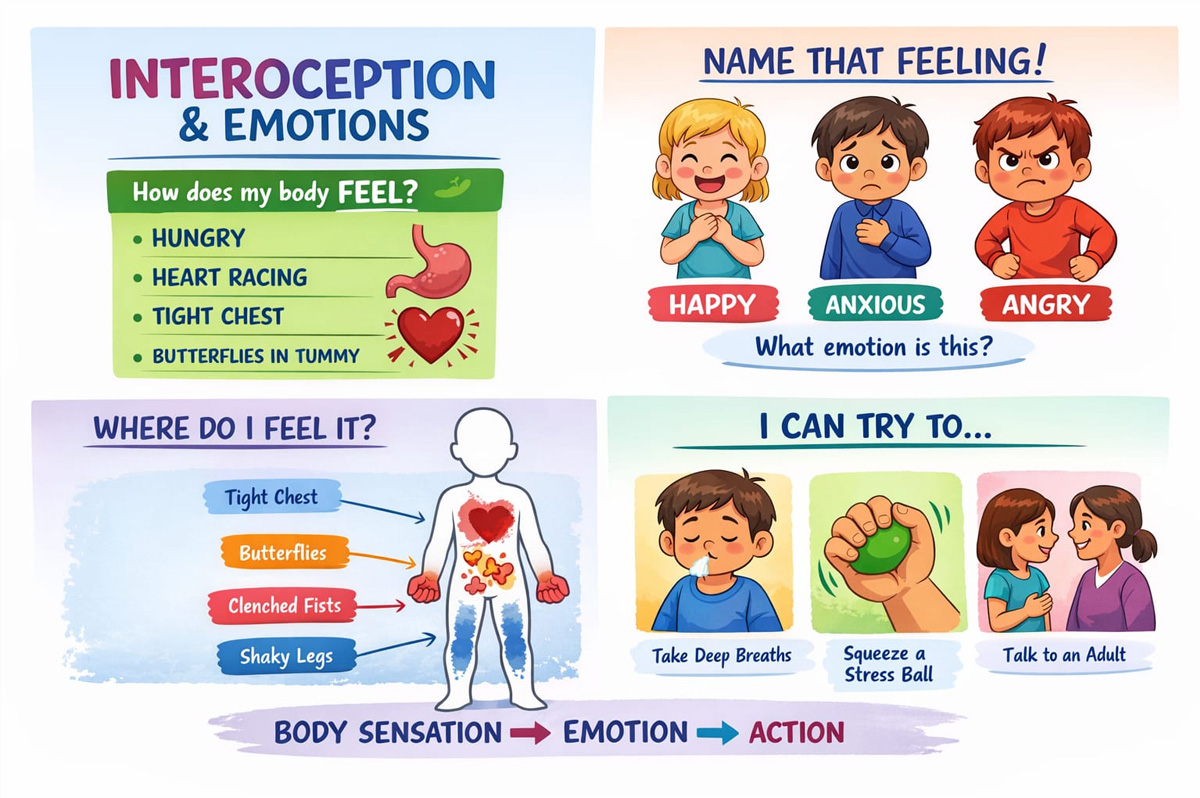
Interoception has a strong connection to emotional processing because of the physical way that we experience emotions. Our muscles clench when we are angry, quiver when we are scared, and relax when we are calm. Likewise, the stomach may feel upset when we are nervous, and one might get a headache from frustration. People with good interoception can relate these physical feelings to emotions. If a person sensory processing differences, the signals from the body may not be accurately represented or relayed to the brain. They may be muddied or confusing, leading to a misunderstanding of what the body is trying to tell the brain. Because of this, a tickle may feel like pain, or a person may not know why they are experiencing discomfort. Without interoception, labelling emotions is then a bit more challenging, as well as understanding how to remedy undesired feelings.
Children may act out in aggression, cry or scream uncontrollably, or show other signs of sensory dysregulation, potentially due to a lack of interoception. If you know a child who has multiple characteristics of reduced interoception, like potty accidents, over/under eating, and emotional dysregulation, they may benefit from therapeutic intervention to improve their body awareness.
The interoception system plays a part in feelings and emotions, too.When we feel anxious or worried, we might feel a tenseness about us. Our heart rate might speed up, and we feel that anxiety coursing through our systems.But for the child with difficulty expressing these feelings, they can’t tell us what they are feeling on the inside. They don’t have the words to identify specific interoceptive feelings they are having. Others might not recognize a racing heart. They might not realize that physical implication of anxiety or worry because they can’t actually feel their racing heart (when it is very much racing).
When one feels anxious about a situation or an idea, we can help them to focus on their heart beat. We can help them take deep breaths to calm down. This focus on how their body is responding can help their internal state match the environment. Other ways to help with interoceptive identification include habit and routines to help us feel organized. When we know what to expect, we feel a lot more organized. The body is able to modulate better.
As we increase the challenge, we have to also increase our supports. We can use some external organizational strategies (deep breaths, awareness, mindfulness, heavy work, routines) to help compensate for the lack of internal ability to organize ourselves. When we are disorganized, this is where we can fall apart. We have to be mindful ahead of time, and be accommodating and accepting of immature nervous systems, whether this is with our children, our spouse, or ourselves.

 Click to Chat