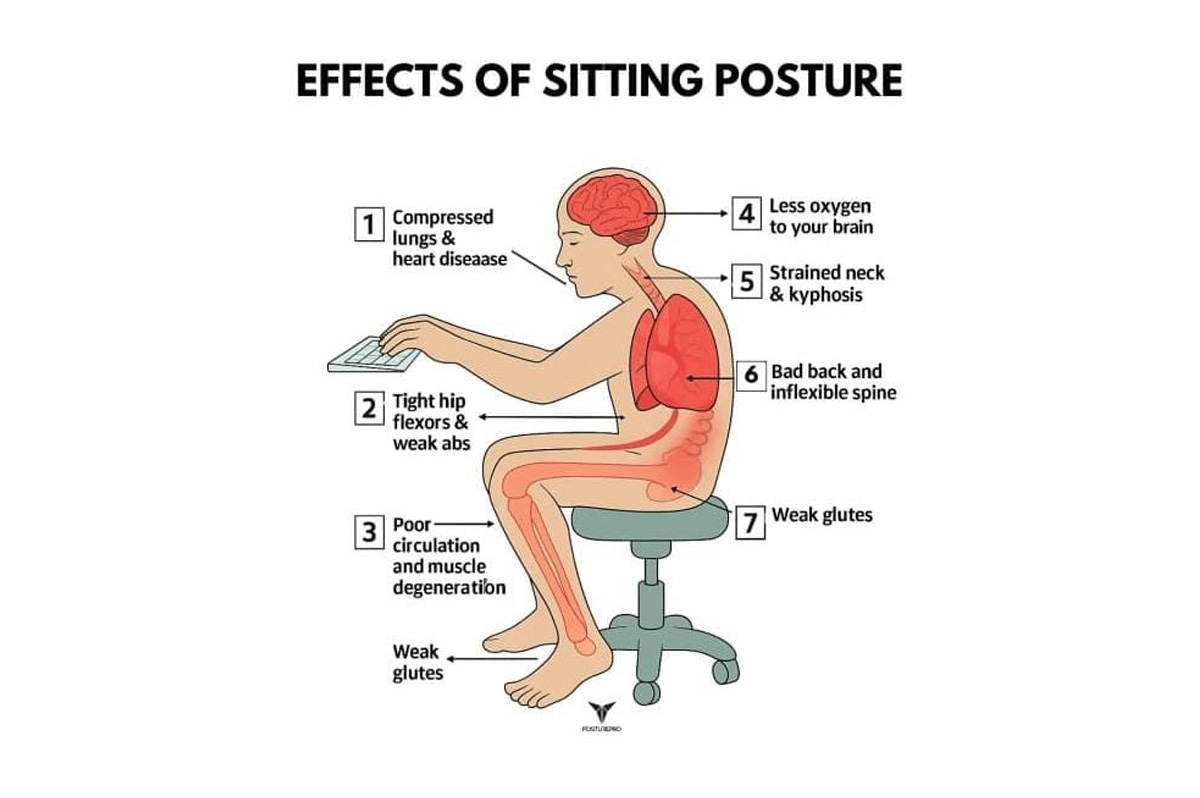
Effects of Sitting Posture
Physical Effects
Poor posture (slouching, leaning, twisting): Can cause back, neck, and shoulder strain.
Leads to fatigue and reduced endurance during classroom tasks.
May cause asymmetry, contractures, or scoliosis in students with motor impairments.
Good posture (aligned trunk, supported feet, upright head):
Improves muscle tone and stability.
Prevents secondary complications like joint stiffness or pressure sores.
Breathing and Voice
Slouched posture compresses the lungs → shallow breathing.
Upright posture allows better lung expansion → improves oxygen supply, voice clarity, and stamina in speech therapy.
Feeding and Swallowing
Posture directly affects vegetative skills like chewing and swallowing.
Properly supported seating reduces choking risks and supports safe swallowing.
Head alignment helps oral-motor coordination.
Attention and Learning
Poor posture = discomfort → distracts from learning.
Proper seating gives stability → frees the brain to focus on cognitive tasks instead of body balance.
Helps maintain eye contact and attention during tasks.
Behavior and Regulation
Children with autism or sensory processing difficulties may fidget or lean for sensory seeking.
Correct supportive seating reduces discomfort, improves regulation, and minimizes disruptive movements.
Communication and Interaction
Upright, aligned posture allows better eye gaze, hand use, and interaction with peers/teachers.
In AAC (communication device) users, correct posture ensures effective hand/eye access.
Best Practices for Special Needs Classrooms
Ensure 90-90-90 posture (hips, knees, ankles at 90°) with feet supported.
Provide adaptive chairs, wedge cushions, or therapy balls if needed.
Use positioning aids (lap belts, side supports, footrests) for children with motor challenges.
Allow posture breaks and movement activities to prevent fatigue.

 Click to Chat