What are Vegetative Skills?
Vegetative skills are the basic oral-motor functions that are not primarily speech-related, but are crucial for developing the muscles and coordination needed for speech.
They include:
Sucking (breastfeeding, bottle feeding, straw sucking)
Swallowing (managing saliva, liquids, and solids safely)
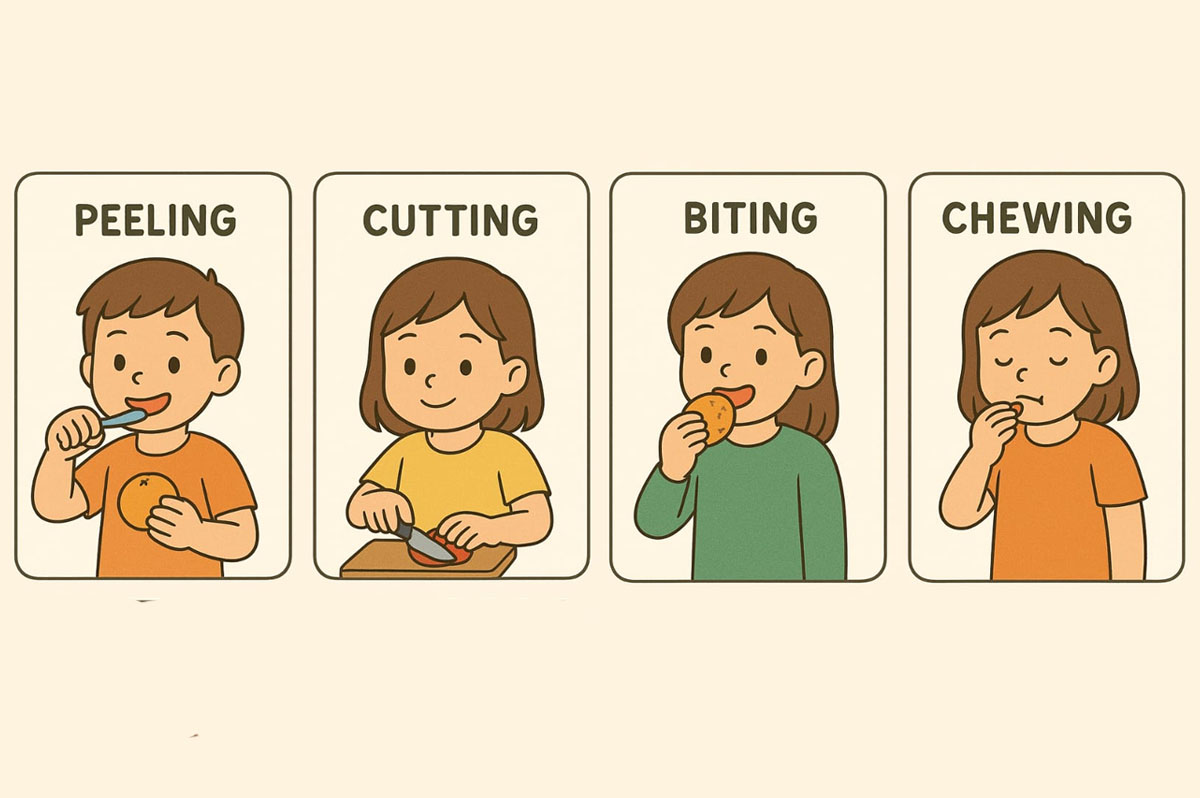
Chewing / biting (moving food, breaking it down, and coordinating with swallowing)
Breathing (nasal breathing, coordination of breath with swallowing and vocalization)
Coughing, gagging, yawning, burping, hiccupping (reflexive protective functions)
Why are Vegetative Skills Important in Early Intervention?
1. Foundation for Speech Development
Good control of lips, tongue, and jaw during feeding and swallowing lays the groundwork for clear sound production later.
For example, tongue lateralization used in chewing is also needed for producing /l/ and /r/ sounds.
2. Oral-Motor Strength and Coordination
Vegetative skills train the same muscles used in speech (tongue, lips, jaw, palate).
They help children develop the stamina and coordination needed for articulation.
3. Breath–Voice–Speech Link
Proper breathing while sucking and swallowing develops control of airflow, which is critical for speech fluency and voice quality.
4. Sensory Regulation
Eating and swallowing involve tactile, proprioceptive, and sensory input inside the mouth.
Children who tolerate textures well orally are often more comfortable with speech movements too.
5. Early Indicators of Speech/Feeding Difficulties
Delays or problems in sucking, swallowing, or chewing can signal later difficulties with speech, language, or oro-motor control.
Addressing them early prevents cascading challenges.
6. Overall Development
Safe and efficient swallowing ensures proper nutrition → better growth, attention, and learning.
Feeding interactions also build bonding, communication, and early turn-taking.
In Early Intervention Practice
Speech-language therapists:
Observe and assess feeding, swallowing, and breathing patterns.
Provide oral-motor stimulation and positioning strategies.
Support parents with feeding techniques that strengthen oro-motor skills.
Use vegetative skill training as a stepping stone to speech sound production.

 Click to Chat